FUE vs FUT Hair Transplant: How To Choose The Right Technique For You

Published by
Elena Prousskaia
Hair transplants are specialist surgical treatments that redistribute permanent hair from the back and sides of the scalp to thinning or balding areas. If you’re considering treatment in the UK, understanding the difference between FUE (Follicular Unit Extraction) and FUT (Follicular Unit Transplantation) is an essential first step.
Both FUE and FUT hair transplant techniques aim to create natural-looking, long-term results when carried out by an experienced, accredited plastic surgeon.
However, FUE is increasingly recognised as the preferred method due to its minimally invasive nature, faster recovery, and minimal visible scarring, in the same way that specialist approaches are required for procedures such as tuberous breast correction surgery. Safety, careful planning, and realistic expectations are at the heart of consultations within Elena Prousskaia’s private practice. Learn more about the key differences between
What is FUE Hair Transplant?
Follicular Unit Extraction is a modern hair transplant method where individual hair follicles are carefully removed directly from the donor area using a tiny circular punch.
The donor area is typically the back and sides of the scalp, where hair tends to be more resistant to thinning and hair loss.
Unlike traditional methods, FUE does not involve a long incision or sutures, which means there is no linear scar. Instead, scarring appears as tiny dot scars that are often difficult to detect once the scalp has healed.
This makes FUE particularly well suited to patients who prefer to keep their hair short or want minimal visible scarring. The procedure involves extracting individual follicular units one by one using a precision micro punch, protecting the follicles and ensuring the best chance of successful growth. Due to the less invasive nature of the technique, recovery time is generally shorter compared with the strip method.
How FUE Hair Transplant Works Step by Step
On the day of the procedure, the surgical team begins with detailed pre-operative planning, discussing hairline design and marking both the donor and recipient areas according to the agreed treatment plan. The hair in the donor region is trimmed short or shaved to allow precise access to individual follicles.
Local anaesthetic is administered to ensure patient comfort throughout the procedure. Using a micro punch, typically around 0.8 to 1 mm in diameter, the surgeon scores around each follicular unit and gently removes it from the scalp. Tiny incisions are then made in the thinning area, carefully following the natural angles and directions of hair growth.
The extracted follicles are placed one by one into these recipient sites to recreate density and a soft, age-appropriate hairline. The objective throughout is to harvest follicular units carefully, protect the individual follicles, and achieve maximum fullness in the treated area.
FUE Recovery and Results: A Quick Timeline

One of the key advantages of FUE is its quicker early recovery compared with strip-based surgery, although long-term hair growth still takes many months to fully develop.
In the first few days following the procedure, patients typically experience some redness, mild swelling, and tenderness in both the donor and recipient areas.
Small crusts may form around the transplanted follicles, and most patients choose to rest at home during this initial period. By days four to seven, swelling usually begins to settle, and gentle washing of the scalp can typically start as advised by the clinical team. Many patients feel well enough to return to desk-based work or light duties at this stage.
Between weeks two and four, the small crusts fall away naturally, and some patients notice temporary shedding of the transplanted hair, which is a normal part of the hair restoration journey. New hair growth begins to appear between months three and six, as the transplanted hairs enter their growth phase and visible improvement starts to become noticeable.
From six to twelve months, fuller, more mature results develop, with most patients seeing the outcome they hoped for between nine and twelve months after surgery.
Follow-up appointments with the surgical team are an important part of care, allowing progress, scalp health, and patient confidence to be monitored.
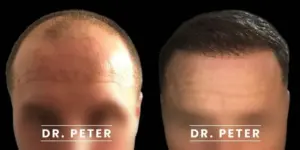
See more amazing before and after results here
What Is FUT Hair Transplant?
Follicular Unit Transplantation, often called the strip method, involves the surgical removal of a thin strip of scalp from the donor region at the back of the head.
This strip is then carefully dissected under magnification into individual follicular units, ready for implantation into the thinning areas.
Because a strip of tissue is removed, the donor area is closed with sutures or staples, resulting in a thin linear scar once healed. FUT has historically been used when a higher number of grafts were needed in a single session, particularly in cases of advanced hair loss. However, this method involves a longer, more painful recovery period and carries a higher risk of numbness along the incision line. The visible linear scar can limit hairstyle options, especially for those who prefer very short haircuts.
A Side by Side Comparison
While both FUE and FUT can provide natural, long-lasting results when matched carefully to the patient and performed by an experienced surgeon, FUE offers distinct advantages. Donor harvesting in FUE involves extracting individual follicular units one by one, leaving tiny dot scars that are often hard to detect.
In contrast, FUT requires removal of a thin strip of scalp, resulting in a visible linear scar at the back of the head. FUE usually requires trimming or shaving of the donor area, but this is a small trade-off for the minimal scarring and quicker recovery it provides. Recovery after FUE is generally faster and less uncomfortable than after FUT, which requires a longer healing period due to the donor site incision and stitches.
While FUT may allow for more grafts in a single session, advances in FUE techniques now enable large numbers of grafts to be transplanted effectively.
FUE is particularly well suited for those wanting very short hairstyles or flexibility in styling, whereas FUT may be better for patients who keep the back of their hair longer to conceal the donor scar.
Hair styling considerations also favour FUE, as the absence of a linear scar allows patients to wear their hair short without concern. Suitability for different patterns of hair loss depends on the extent of thinning and available donor density, but FUE is often recommended for mild to moderate hair loss and patients seeking a minimally invasive technique.
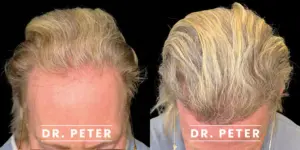
See more amazing before and after results here
With a patient-centred approach, the final decision is made during a detailed consultation that considers hair quality, scalp condition, medical history, and personal preferences.
Post Transplant Care: The First 10 Days
Meticulous aftercare in the first ten days is crucial for graft survival, comfort, and the quality of the final outcome. These principles apply to both FUE and FUT procedures, but the less invasive nature of FUE often makes care easier to manage.
Patients should keep the scalp dry as instructed, sleep with the head elevated to reduce swelling, and avoid touching or scratching the grafts, which are delicate and need time to anchor securely. Gentle hair washing usually begins as guided by the clinical team, typically after a set number of days using a specific technique.
During recovery, you should consider restricting some aspects of your lifestyle, include avoiding heavy exercise, swimming pools, saunas, and direct sun exposure on the scalp during initial healing. Prescribed medications such as pain relief, antibiotics, or anti-inflammatory tablets should be taken as advised by the surgeon.
Cost and Value Considerations in Private Practice
Exact pricing is tailored to the individual treatment plan after a one-to-one consultation. Several factors influence the overall cost of a hair transplant procedure, including the number of grafts needed, surgical time, the experience of the clinical team, and the quality of the accredited facilities used. FUE can involve more time and meticulous work per graft, which may influence pricing compared with FUT techniques.
However, many patients find the benefits of FUE, such as faster recovery, minimal scarring, and greater styling flexibility, worth the investment. FUT can allow a large number of grafts to be transplanted in a single session, which may be considered when planning the most efficient route to achieve maximum fullness, but this comes with a longer recovery and visible scarring.
At North Bristol Private Hospital, we offer flexible payment options such as 0% finance on many procedures, helping patients plan their treatment responsibly. The priority is always long-term value, natural outcomes, and safety rather than the lowest possible price per graft.
Who is a Good Candidate for FUE Transplants?
Suitability for either hair transplant method can only be confirmed after an in-person or virtual consultation with a qualified surgeon. Several factors influence your candidacy, including age, overall health, pattern and stability of hair loss, family history of baldness, and realistic expectations. Hair characteristics such as colour contrast between hair and skin, curl, calibre, texture, and overall donor density also play a role.
Long-term maintenance planning is essential, which is why our consultations are designed to provide balanced information, explore alternative options, and ensure patients have time to reflect before making decisions.
Why Choose North Bristol Private Hospital?

Hair transplant surgery is a significant decision. Many patients feel more confident choosing a reputable private hospital known for its high standards in both reconstructive and aesthetic procedures. North Bristol Private Hospital is an accredited facility offering expert hair transplant treatments performed by experienced surgeons.
The hospital’s approach emphasises individualised treatment planning, natural-looking results, and honest consultations about what surgery can and cannot achieve. Their wider expertise in cosmetic and reconstructive surgery ensures meticulous graft placement and careful attention to hairline design.
When you choose to have surgery at North Bristol Private Hospital, you benefit from fully equipped operating theatres with experienced anaesthetic teams, robust clinical governance in accredited private facilities, a focus on safety, patient wellbeing, and refined aesthetic outcomes, and personalised care from initial consultation through to follow-up appointments.
If you are considering a hair restoration journey and want to understand whether FUE vs FUT is right for you, arranging a consultation at North Bristol Private Hospital is the first step. During this appointment, you can discuss your goals, ask questions. During this appointment, you can discuss your goals, ask questions, review examples in the treatment gallery of cosmetic and hair procedures, and receive a tailored recommendation based on your unique circumstances.
Frequently Asked Questions about FUE vs FUT Hair Transplant
How long will my hair transplant results last?
Transplanted hair follicles from stable donor areas are generally permanent. These follicles retain their original characteristics after being moved, which means they continue to grow in their new location for many years. However, surrounding native hairs can continue to thin over time, so long-term planning is essential. A consultation always includes discussion of how hair loss may progress and whether future procedures or medical treatments may be advisable.
Will a hair transplant look natural?
When FUE is carried out by a skilled surgeon who respects natural hair direction, density, and hairline design, results should look subtle rather than obvious. Attention to detail in graft placement, especially around the frontal hairline and temples, is key to a believable outcome. At North Bristol Private Hospital, our practice focuses on refined, proportionate changes that sit in harmony with the rest of the face, ensuring natural-looking hair that suits the individual.
Can I combine a hair transplant with other aesthetic procedures?
Some patients choose to combine hair restoration with facial procedures such as eyelid surgery or non-surgical treatments, provided it is safe to do so. Whether combination treatment is appropriate depends on overall health, operative time, and recovery considerations. Staging procedures may sometimes be safer or more comfortable, and this will be discussed openly with each patient during consultation.
When can I return to exercise after FUE or FUT?
Gentle walking is usually encouraged in the early days following surgery. Strenuous exercise, contact sports, and heavy lifting are normally delayed for a period agreed with the surgeon. This recovery time may be shorter after FUE and longer after FUT because of the linear donor closure. Patients receive personalised written advice from the clinical team and should follow it carefully to protect both grafts and scars.
How do I book a consultation with Elena Prousskaia?
You can easily book a consultation with Elena Prousskaia by entering your details here.
To make the most of your appointment, prepare questions, gather relevant medical information, and bring photographs of your hair concerns so the discussion is as productive as possible. A free consultation can be the starting point for your hair restoration journey.
Share this article
Back to Advice Centre