
Hair loss affects a significant proportion of adults in the United Kingdom. Research suggests that around half of men experience noticeable thinning by the age of fifty, while female pattern hair loss is also more common than many people realise.
For those who have tried topical treatments, supplements or styling strategies without satisfactory results, surgical hair restoration increasingly becomes a topic of serious consideration.
FUE, which stands for follicular unit excision, is one of the most widely discussed approaches to hair transplant surgery today. In simple terms, it involves removing individual hair follicles from areas of the scalp where hair growth remains strong and placing them into thinning or balding regions. Unlike older methods, FUE is designed to avoid a long linear scar, making it particularly appealing to patients who prefer shorter hairstyles.
Consultations and surgical procedures take place at North Bristol Private Hospital, an accredited setting offering modern facilities and a carefully managed patient experience. The consultation process focuses on understanding your medical history, expectations, and long-term hair restoration goals to ensure any treatment recommendation is tailored to your individual needs rather than a one-size-fits-all solution.
This article will explain what FUE is, who it suits, how the procedure is carried out, what recovery looks like, how costs are approached, and how to arrange a consultation if you would like to explore your options further.
What is FUE Hair Transplant?
FUE hair transplant is a modern technique where follicular units, each typically containing one to four hairs, are removed one by one from a donor area using tiny punches. These punches are usually between 0.6mm and 1.0mm in diameter, small enough to cause minimal trauma to surrounding tissues while allowing precise extraction of individual grafts.
The donor area is most commonly the back and sides of the scalp. Hair in these regions tends to be more resistant to dihydrotestosterone, the hormone primarily responsible for androgenetic alopecia. In some cases, beard or body hair may be considered if scalp supply is limited, though texture matching must be carefully evaluated to ensure the final result looks natural.
Once harvested, the follicular units are kept in a specialised solution to maintain their viability. They are then implanted into carefully prepared sites in the recipient area, recreating a fuller hairline, crown or other targeted regions. The placement of each graft is planned to match the natural direction, angle and density of existing hair, which is essential for achieving a more natural appearance.
One of the defining characteristics of FUE is the scarring pattern it produces. Rather than a single linear scar, FUE leaves many tiny white scars that usually become difficult to detect once the surrounding hair regrows. This makes it a popular choice for anyone who wants flexibility in how short they can wear their hair.
FUE vs FUT and Other Hair Transplant Methods
FUT, or follicular unit transplantation, is the older strip method of hair transplantation that developed during the 1990s. In this approach, a narrow strip of scalp tissue is removed from the donor area, typically measuring up to one to two centimetres in width. The strip is then dissected into individual grafts under magnification before being implanted into recipient sites.
The main practical difference for patients relates to scarring and hairstyle flexibility. FUT typically leaves a linear scar that can be visible if hair is worn shorter than around two centimetres. FUE, by contrast, is designed to avoid this type of scarring, instead producing many tiny punctate scars that are usually concealed by surrounding hair even at short lengths.
|
|---|
Both FUE and FUT move donor hair to the target area where it is needed, and both can produce excellent natural results in experienced hands.
The choice between methods depends on donor hair characteristics, your medical history, your preferences regarding hairstyle and long term planning. All of these factors are explored thoroughly during a detailed consultation at North Bristol Private Hospital.
The Benefits, Risks and Side Effects of FUE
FUE offers several advantages that explain its popularity among patients considering hair restoration. Minimal visible scarring compared with strip methods is one of the most frequently cited benefits, along with less postoperative pain and a quicker return to daily activities for most patients. Many people are able to resume desk based work within about a week of their procedure.
Natural looking results are achievable when FUE is performed with care and attention to detail. The key lies in planning hairline design, graft placement angles and density distribution to create an outcome that suits facial features and ages gracefully. Patient satisfaction rates in published studies typically range from 85 to 95 percent, particularly for those with Norwood scale 2 to 5 patterns.
However, realistic expectations are essential. Transplanted hair grows in gradually over many months, and density is ultimately limited by donor hair availability. Not everyone has enough hair in the donor area to achieve their ideal result in a single session, and long term planning may involve multiple procedures or complementary medical treatment.
Typical risks associated with FUE include a small risk of infection, temporary swelling, altered sensation in donor or recipient areas and uneven growth. Serious complications are uncommon in experienced hands, with infection rates typically reported at less than one percent.
Common temporary side effects include tiny scabs around each graft site, mild redness, itching and initial shedding of the transplanted hairs before new growth begins. This shedding, sometimes called shock loss, is a normal part of the hair growth cycle and should not cause alarm.
If you have any concerns or questions at all, your consultation is the perfect opportunity to learn more. All risks, benefits and alternatives are discussed before any procedure is scheduled, ensuring you can make an informed decision with confidence.
Who is an Ideal Candidate for FUE?
FUE can be considered for both men and women. Men commonly seek treatment for a receding hairline or thinning crown, while women may experience more diffuse thinning. Some patients also use FUE to refine previous hair transplant work or to address scarring from previous surgery.
Overall health is also an important consideration. Certain medical conditions, medications or habits such as heavy smoking may affect suitability, the healing process and final results. Conditions such as alopecia areata or uncontrolled clotting disorders may also mean that FUE is not appropriate.
Hair characteristics also influence outcomes. Coarse, dark hair against a pale scalp tends to create a fuller visual impression than fine, light coloured hair, simply because each strand covers more area and provides greater contrast. These factors are assessed during consultation to give you a realistic picture of what your own result might look like.
Booking a personal consultation at North Bristol Private Hospital with a top plastic surgeon experienced in FUE hair transplants is the best way to assess your candidacy. This includes a detailed examination, discussion of your medical history and exploration of your long term hair preservation goals.
How Much Does FUE Hair Transplant Cost?
Costs for FUE vary depending on several factors, including the number of individual hair grafts required, the size of the area being treated and whether additional sessions or complementary treatments are advised. There is no single price that applies to everyone, which is why personalised assessment is so important.
Pricing will be discussed transparently during consultation once an individual plan has been created. This ensures you understand exactly what is included and can make a decision based on accurate information rather than generic estimates found online.
The fee typically covers the surgical procedure itself, essential preoperative assessments and structured postoperative follow up. This comprehensive approach supports you throughout your journey rather than leaving you to navigate recovery alone. You are encouraged to enquire about finance during your appointment if this would be helpful for planning your investment in hair restoration.
Arranging a consultation is the best way to receive an accurate indication of costs and to discuss payment terms for self-funded surgery. Online price ranges can be misleading because they do not account for individual factors such as donor density, graft requirements and any additional treatments that might be recommended for long term hair preservation.
Results, Expectations and Before and After Imaging
FUE results are best assessed over time, with emphasis on gradual improvement in hair density, hairline definition and styling flexibility. Patience is important because the full effect of the procedure emerges slowly as transplanted follicles establish themselves and begin producing new hair.
Individual outcomes vary depending on donor supply, hair characteristics and adherence to aftercare. Some patients achieve their goals in a single session, while others may benefit from considering further treatment after twelve to eighteen months to add density or extend coverage.
You should always review examples of hair restoration results during your consultation. Seeing real patient outcomes helps shape a sensible understanding of what can be achieved in your own case, taking into account your specific hair characteristics and donor availability.
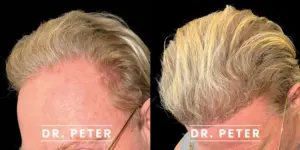
Discover more before and after results with our full gallery today
Choosing a Hair Transplant Surgeon and Clinic

Selecting the right team for your hair transplant surgery is one of the most important decisions you will make. Look for a consultant led service with robust surgical training, accreditation and experience in both cosmetic and reconstructive work.
If you are considering FUE or another approach to hair restoration, contact the team at North Bristol Private Hospital to arrange a consultation.
Frequently Asked Questions
Is an FUE hair transplant permanent?
Transplanted follicles are typically taken from areas of the scalp that are relatively resistant to hormonal hair loss. Once moved to the recipient area, these follicles usually behave like permanent hair in their new location, continuing to grow throughout your lifetime.
It’s important to note that no procedure can halt all future thinning of non transplanted native hair. This is why long term medical management and realistic planning remain important. During your consultation, the long term pattern of hair loss is considered so that the hairline design remains appropriate as you age.
Will people be able to tell I have had an FUE hair transplant?
In the first couple of weeks, close contacts may notice redness, short donor hair or tiny scabs, especially if the head is closely shaved or hair is worn very short. This is a normal part of the healing process and settles relatively quickly.
Once healing is complete and hair has grown in, a well planned fue procedure is usually difficult for others to detect, even at close range. The key lies in careful planning of hairline shape, graft placement angles and density distribution. Patients can discuss hairstyle choices during consultation to help conceal early signs of surgery during recovery.
How long does an FUE hair transplant take on the day?
Many FUE sessions for common areas such as the frontal hairline or crown take most of a day, often in the region of six to eight hours depending on the number of individual grafts being placed. Larger sessions may take longer.
Time is needed for careful planning, numbing the scalp with local anaesthesia, gentle harvesting of follicles, preparation of recipient sites and meticulous placement of each graft. Patients are usually able to go home the same day once final checks and aftercare instructions have been completed.
Can FUE be used for beard or eyebrow restoration?
FUE techniques can be adapted for areas such as the beard and eyebrows in selected patients. These areas require particularly detailed planning of angle and direction to achieve natural results, as the growth patterns differ from scalp hair.
Donor hair is usually taken from the scalp for these procedures, and texture differences may influence the final appearance. Discussing non scalp goals during consultation allows suitability, design and expected results to be considered carefully before any treatment is recommended.
What should I bring to my FUE consultation?
Bringing a list of current medications, relevant medical history and any previous hair treatment details helps ensure your consultation is as productive as possible. Photographs from earlier stages of hair loss can also be useful for understanding how your pattern has progressed.
Prepare a note of key questions about downtime, styling during recovery, long term maintenance and costs so everything can be covered during your appointment. Think about how you ideally want to wear your hair in the future, as this helps guide planning of hairline position and desired density.
Share this article
Back to Advice Centre